
About us
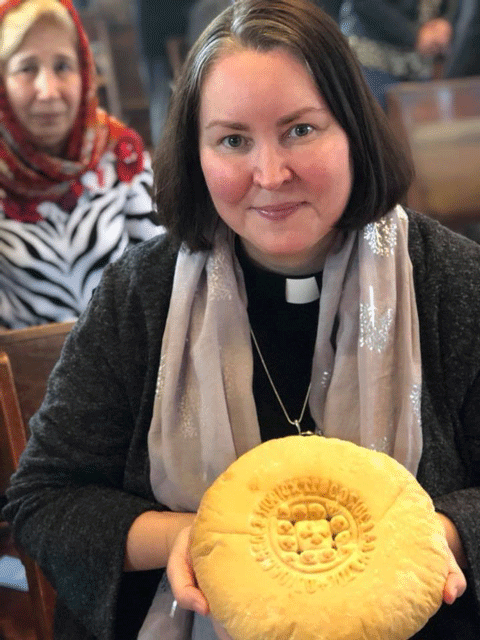
Katie Thomas - Vicar
Email: vicar@stjamesmalden.com
Mother Katie leads our church family with compassion and wisdom, providing spiritual guidance and pastoral care to our diverse congregation.
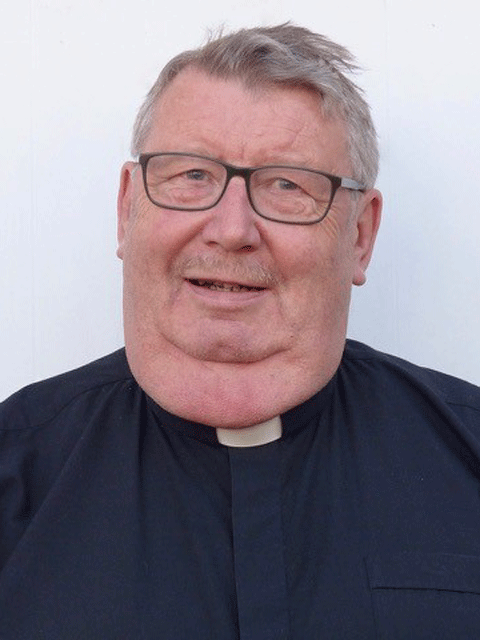
Father Clive
Father Clive serves our church family with dedication and humility, offering spiritual support and faithfully assisting in the Church.
Legal Information
St James’ Malden is part of the Church of England managed by the Diocese of Southwark. It is also a registered charity in its own right.
Registered Charity Number: 1134802 England & Wales
“Walking, Welcoming, Growing.”
At St James, we are guided by the Vision of the Diocese of Southwark.
Walking
Walking with Jesus and getting to know Jesus better as we journey on together in faith and community.
Welcoming
Welcoming all, embracing our diversity and seeking new ways of being a church that is inclusive and open to all.
Growing
Growing in numbers, generosity, faith and discipleship as we grow God’s Kingdom here in Malden and beyond.
Data Protection / GDPR
Personal information collected on this website will be passed by e-mail to relevant members of the congregation to respond to your needs. This website has been designed NOT to use cookies or store any personal information.
Links to external websites
Elsewhere in this website we have included links to other websites we think you may find useful. St James’ takes no responsibility for the content of these sites. If you feel the content of any of these sites is not suitable for our audience please contact us and we will investigate.
A Living Piece of History
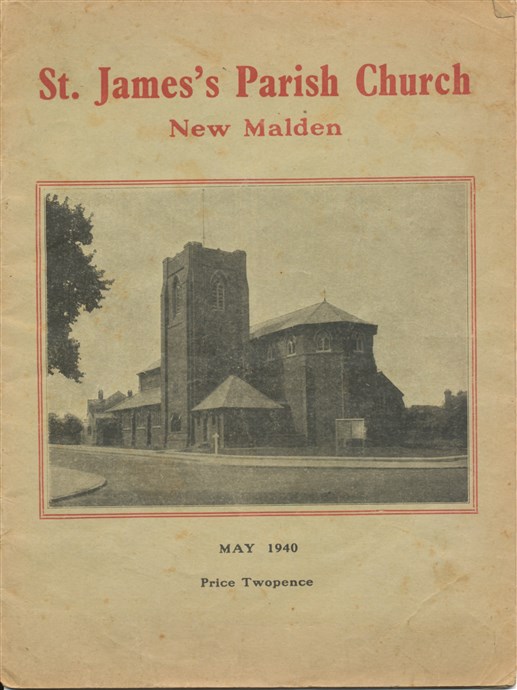
Our beautiful church was built between 1931-33, designed by architects J.E. Newberry and C.W. Fowler. It’s a wonderful example of the ‘restrained Perpendicular’ style, which was popular for churches built between the World Wars.
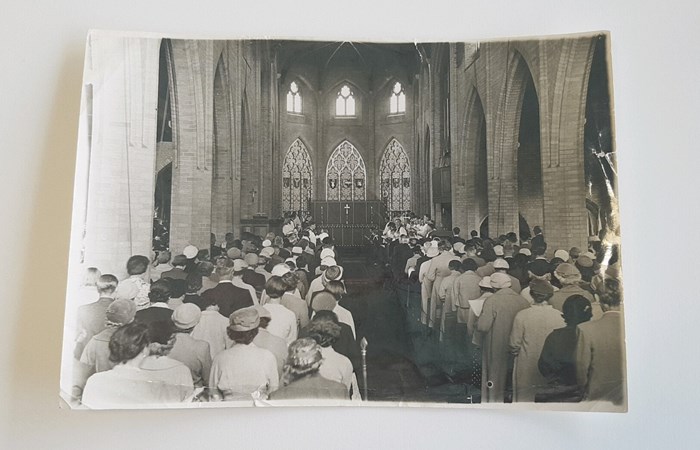
It was one of 25 new churches built by the Southwark Diocese, inspired by Dr. C.F. Garbett. Though damaged in a 1944 air raid, it was carefully restored by C.W. Fowler and fully completed in 1954. Today, it stands as a peaceful and prayerful space for all.
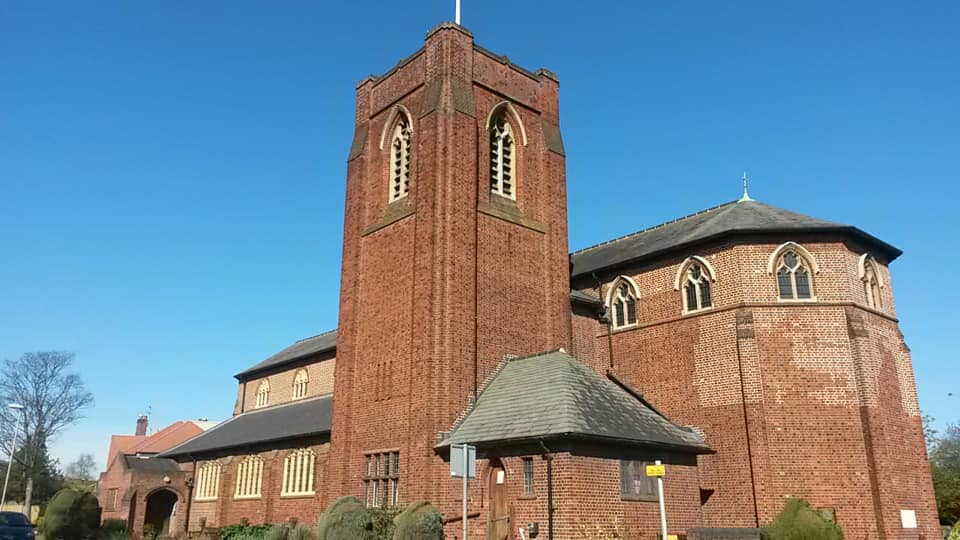
MATERIALS: red brick with stone dressings and with slate roofs. The interior is faced in unpainted buff brick; the roof is of Columbian pine, fittings are of oak and pine.
PLAN: It has a five-bay, buttressed, aisled nave and two bay chancel with an apsidal buttressed sanctuary which has a shallow hipped roof, which throughout has plain oversailing eaves. Attached to the south side of the chancel by a narrow external link is a four-stage tower. At the west end of the nave are north and south porches. Opening off the chancel to the north is a two-bay chapel, expressed externally as a transept and lower eastern bay while, to the south, vestries fill the lower stages of the tower. A single-storey hipped-roofed priest’s vestry is attached to the east of the tower.
EXTERIOR: Aisle windows have five cusped lights under a wide cambered brick arch, while clerestory windows have three-light panel tracery. The seven-light west window with Perpendicular tracery is flanked by three-light aisle windows. North and south porches have pitched roofs behind gabletted parapets, and windows with brick mullions. Entrances are set back under four-centred brick arches and each has a pair of panelled doors. The tower is slightly battered, with very slightly set back buttresses, and a solid parapet. It is almost without embellishment except for the coping of the parapet which reflects the pointed arches of the bell chamber windows. The lower stage of the south face of the tower has a four-light window with brick mullions and transoms, above which is a stair window of three narrow vertical lights. Louvred bell chamber windows are of two cusped lights beneath a hoodmould. Windows on the vestry attached to the east of the tower have tall narrow window openings which echo those on the tower. Two-light clerestorey windows to the chancel are set high in the wall above a continuous moulded brick band, drawing light into the sanctuary from a high level in a manner similar to those at St Hilda, Crofton Park. A tall north transept projects slightly beyond the aisle and eastern bay of the Lady Chapel, and has a large five-light window with panel tracery while the east window of the chapel is of three lights with a tall cusped central panel.
INTERIOR: The interior is of unpainted buff brick. Arcades have quadrilateral piers with plain chamfered arrises, and slender wall shafts rising to carry a simple arcade above the clerestorey windows, a pattern repeated in the sanctuary. At the crossing, tall arches with multiple mouldings open onto the transept to the north and house the organ chamber to the south, while the arch to the Lady Chapel is set under a blind arcaded panel. Circulation at the east end continues through the Lady Chapel which opens onto the sanctuary and through a narrow ambulatory passage beneath the organ loft to the south, in a manner also similar to St Hilda Crofton Park. Aisle windows are set back under plain cambered arches and have red tile cills and mostly rectangular leaded lights. In contrast with the simplicity of the walls, the nave roof is scissor-braced, with exposed purlins, while the aisles have two tiers of purlins, each supported by kingposts with longitudinal braces. Nave and aisle floor are of Granwood blocks.
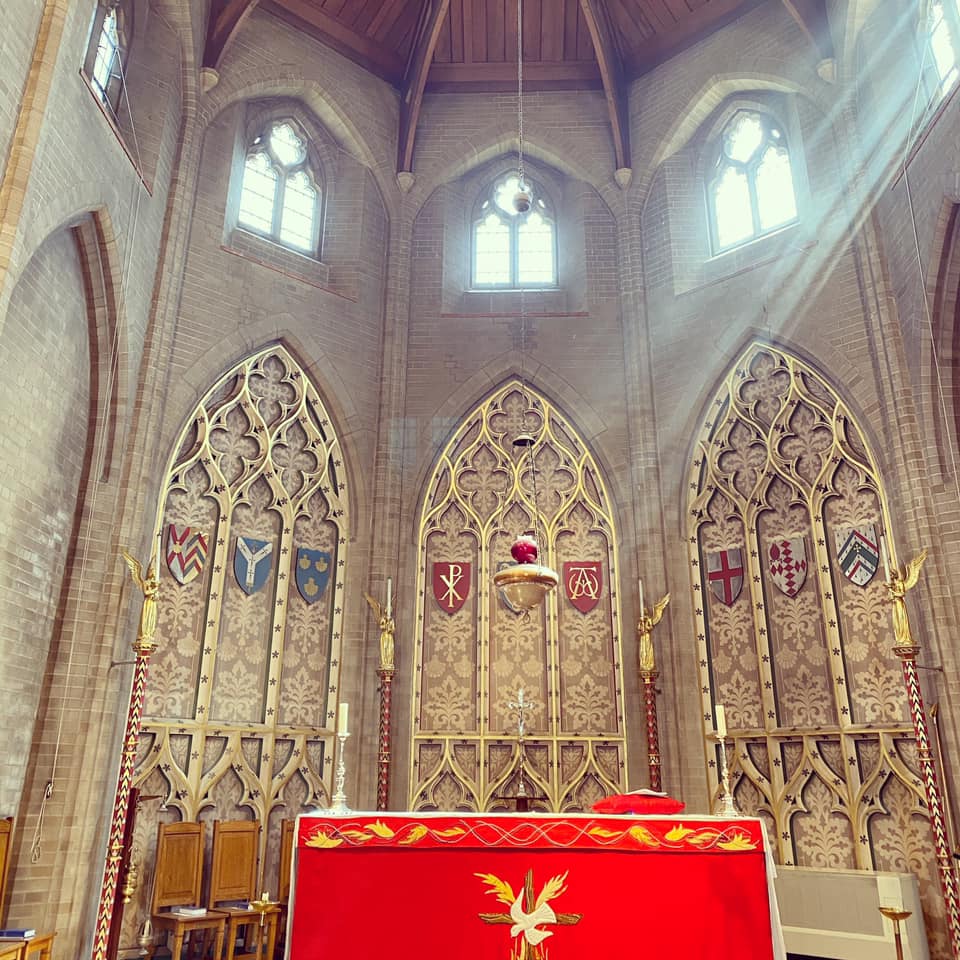
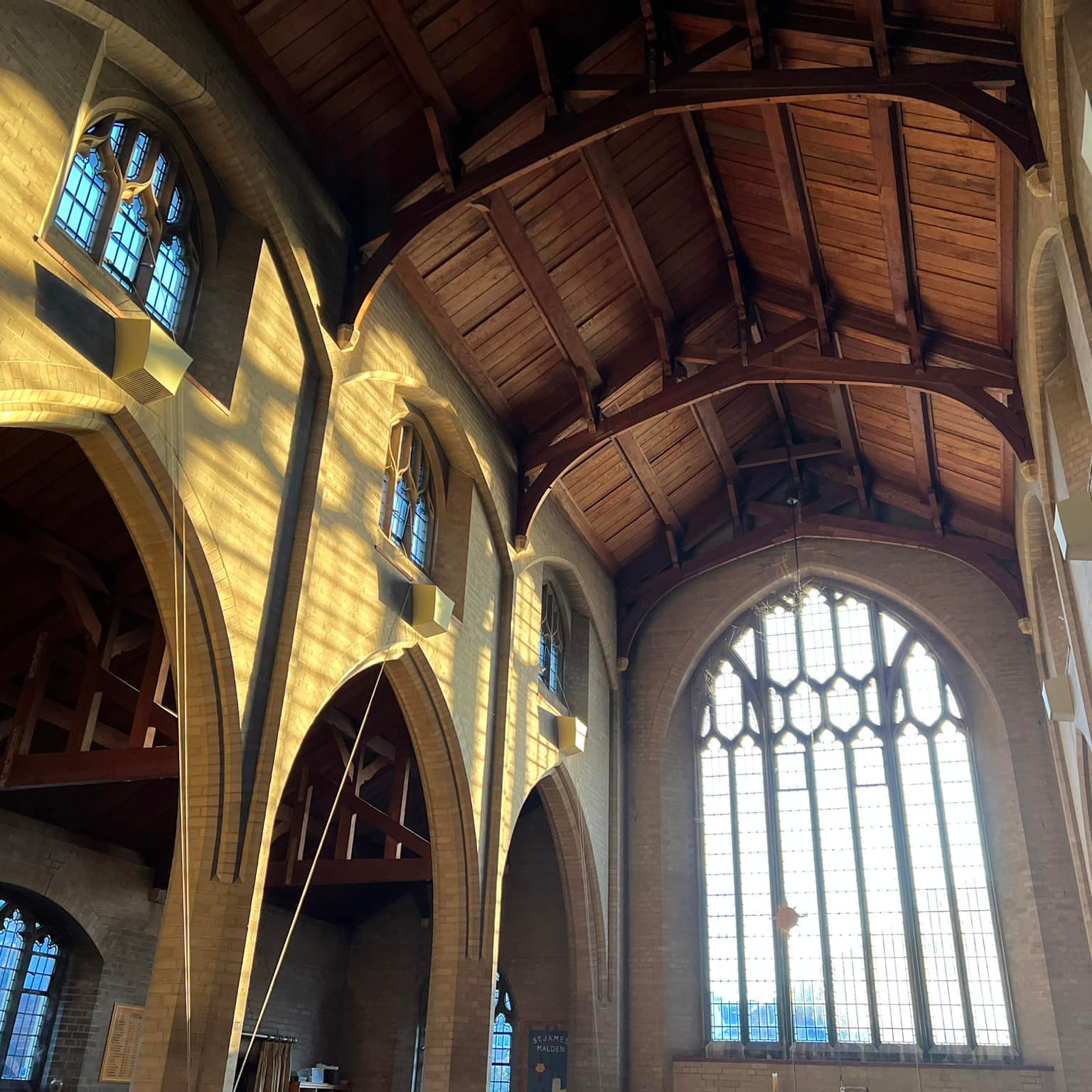
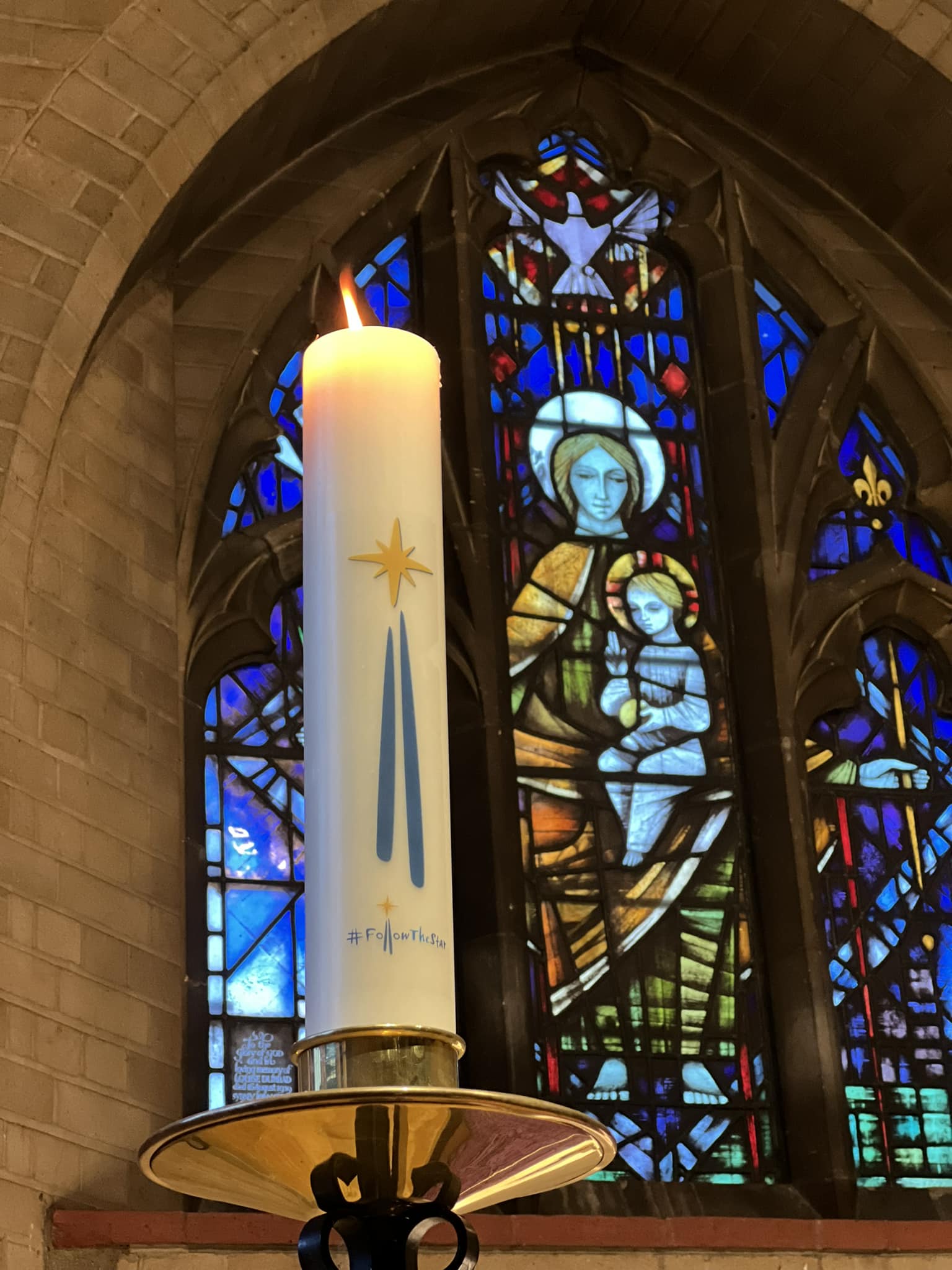
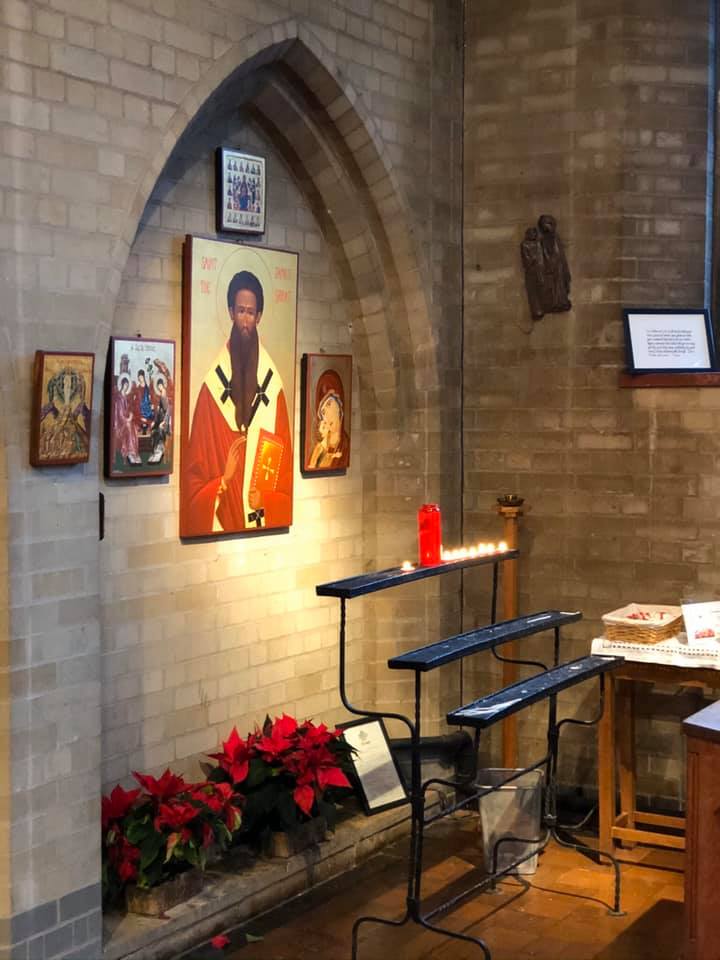
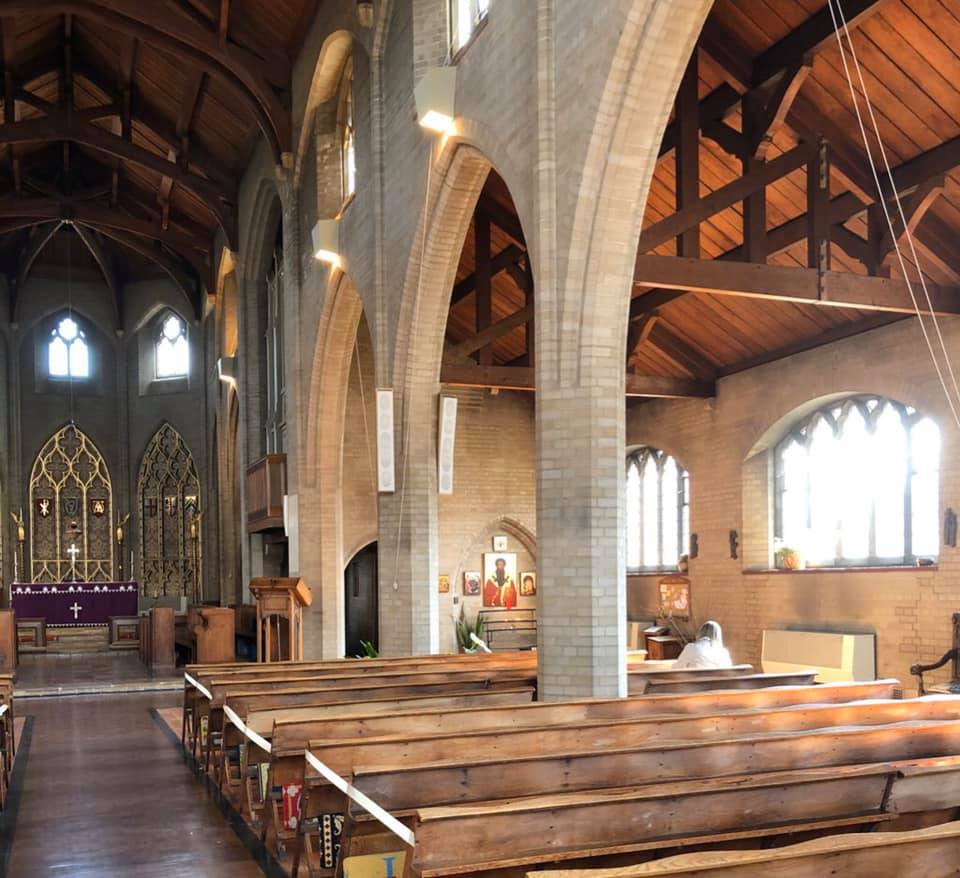
The interior retains most of its original finishes and fittings augmented by more recent donations such as memorial glass, statuary and Stations of the Cross. Fittings are of oak and pine and include doors, the pulpit and chancel seating, designed by Newberry. The nave retains its unusual original folding pews. The sanctuary and south chapel which opens off it are treated as one, with similar simple oak altar rails, and flooring. Sanctuary gates were installed in 1938. The reredos of filigree gilded cusped panels was designed in 1958 by JBS Comper, son of prominent church architect Sir Ninian Comper. The Brycesson pipe organ, built in the 1820s, suffered bomb damage in 1944 and after an interlude with a replacement organ, has been refurbished. The font which was also damaged in 1944 was restored with a later cover, to Fowler’s designs. Set into the west wall is a fragment of sculpted stone from Southwark Cathedral.
Our Place in History
The ‘Twenty Five Churches’ Scheme
When JE Newberry retired, he wrote that he had designed some twenty churches, mostly in the diocese of Southwark. Many of these were commissioned by the Diocese of Southwark from the Twenty Five Churches Fund. The scheme was the inspiration of Dr CF Garbett, who was appointed Bishop of Southwark in 1919, and committed the diocese to building or enlarging twenty five churches in the London suburbs. The project was one of several prompted by Lloyd George’s ‘homes fit for heroes’ campaign to build new houses following the end of the First World War. The Fund closed in 1934, making St James, New Malden one of the last churches to be built under its auspices. However, church building within the Diocese continued until the early years of the Second World War.